Photopolymer resins
How to choose a photopolymer resin for the task
Casting, heat, strength, elasticity or static dissipation — choosing a resin starts with the function of the part and ends with post-processing.
Blog · Filaments
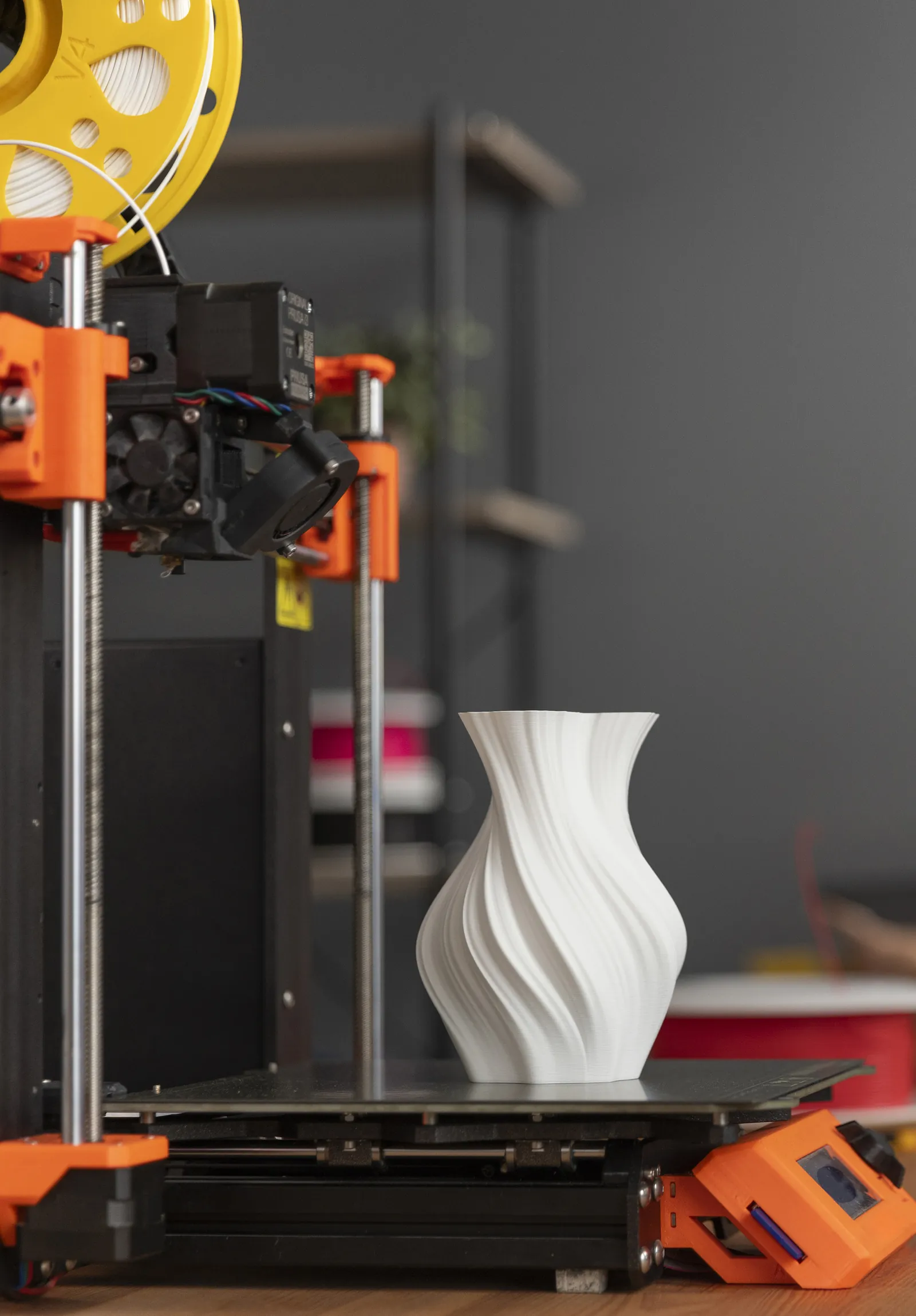
PLA and PETG are the two most popular filaments for everyday and professional printing. AddiNova makes both on its own equipment with a diameter of 1.75 ± 0.02 mm, and every batch is checked in the testing laboratory. The choice between them depends on what the part has to do.
PLA (polylactide) is a material for concept models, mock-ups, design items, teaching and quick geometry checks. It prints at lower temperatures and forgives imperfect settings.
PETG (polyethylene terephthalate glycol) is a more viscous material for functional prototypes, housings and mounts with low shrinkage.
| Parameter | PLA | PETG |
|---|---|---|
| Tasks | mock-ups, teaching, geometry checks | functional prototypes, housings, mounts |
| Nozzle | 190–220 °C | 230–250 °C |
| Bed | 40–60 °C | 60–90 °C |
| Diameter | 1.75 ± 0.02 mm | 1.75 ± 0.02 mm |
| Spool | net 1 kg, gross 1.3 kg | net 1 kg, gross 1.3 kg |
When there are many printers, repeatability matters most: stable diameter, clean winding, correct storage and the same behaviour of the material from batch to batch. Controlled diameter and a round cross-section support steady feeding.
The temperatures given are starting ranges. The exact regime depends on the printer, nozzle, speed, cooling, bed surface, material colour and part geometry. A test print is always made before serial printing.
More in the blog

Photopolymer resins
Casting, heat, strength, elasticity or static dissipation — choosing a resin starts with the function of the part and ends with post-processing.

Partnership
Eight questions after which our engineers can propose a grade or formulation without a long exchange of messages.
Advanced materials for additive manufacturing
Specify the process and printer, the function of the part, load, temperature and environment, your current material, the reason for replacing it, the acceptance criterion, volume and country of use.
Contact us